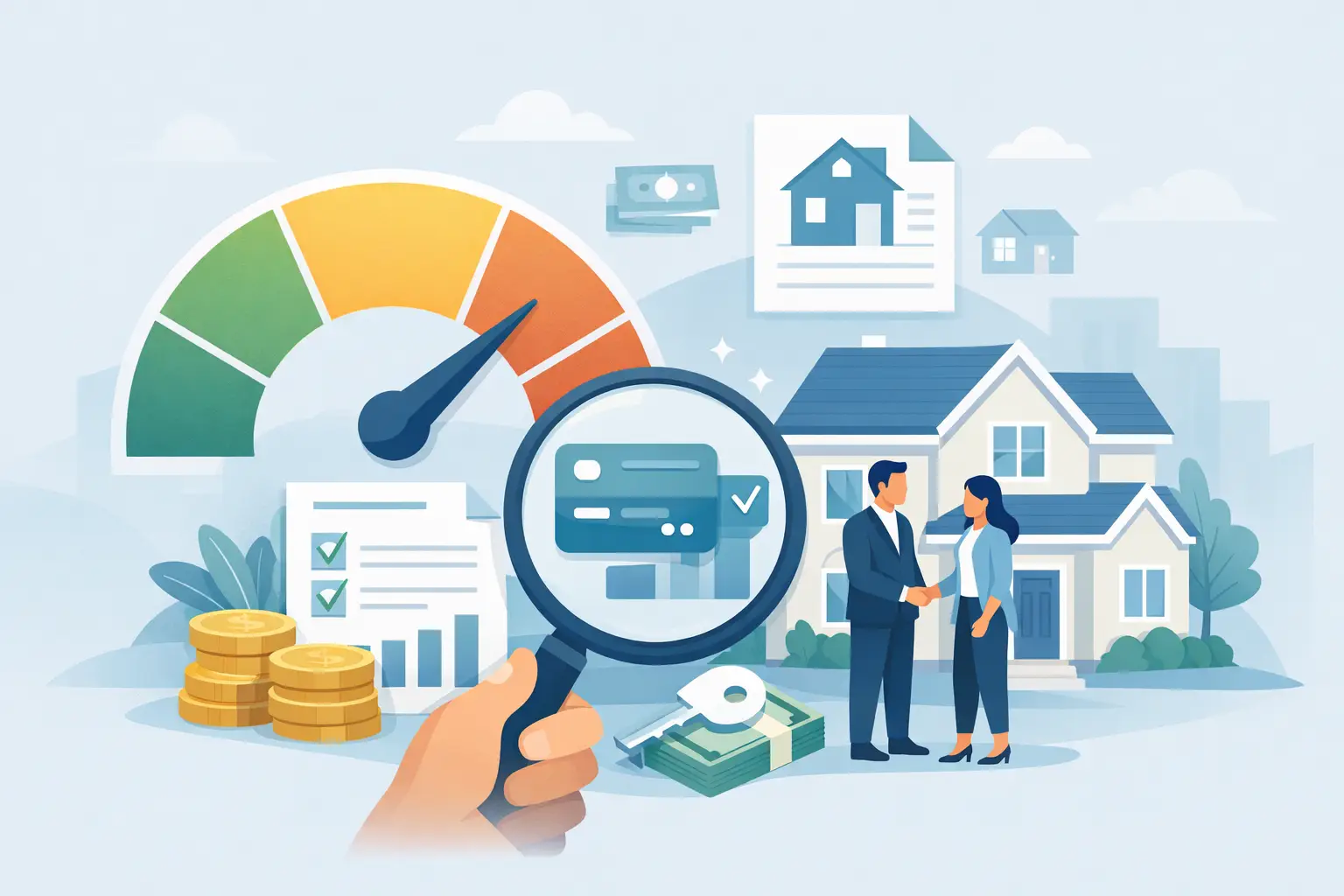
You found a home you like, ran the numbers, and then the question hits fast: what credit score for conventional loan approval do you actually need? The short answer is that many conventional loans start at a 620 minimum credit score, but that number alone does not tell you whether you will qualify easily, what rate you will get, or how much the loan will really cost over time.
That is where many borrowers get tripped up. A 620 score may open the door, but conventional lending rewards stronger credit in a big way. Better scores can mean lower rates, lower monthly payments, and fewer pricing adjustments. If your score is on the edge, approval may still be possible, but the rest of your file has to work harder.
What credit score for conventional loan approval is typical?
For most borrowers, the baseline answer is 620. That is the commonly referenced minimum for a conventional loan backed by Fannie Mae or Freddie Mac guidelines. If your score is below that, a conventional mortgage usually becomes much harder to secure, and another loan type may be a better fit.
Still, minimum and competitive are not the same thing. Borrowers with scores in the 680 to 740 range often have more options and stronger pricing. Once you move above 740, you are generally in a position to access some of the best conventional loan terms available, assuming your income, assets, and debt profile also make sense.
This matters because lenders do not look at credit score in isolation. They look at risk as a whole. A borrower with a 700 score, stable income, strong reserves, and a modest debt load often looks very different from a borrower with the same score and multiple recent late payments.
Why your credit score matters beyond approval
Many buyers focus only on getting a yes. That is understandable, but with mortgages, the better question is whether the loan is affordable and efficient.
Your credit score affects more than eligibility. It can influence your interest rate, private mortgage insurance cost if you put down less than 20%, and how much flexibility you have with debt-to-income ratio. In practical terms, two borrowers can both qualify for a conventional loan and still end up with noticeably different monthly payments.
That difference gets more expensive over time. Even a slightly higher rate can add up to thousands of dollars over the life of a mortgage. If you are close to buying but your score could improve with a little cleanup, waiting briefly may save more than rushing.
A 620 score is possible, but not always ideal
There is a big difference between possible and favorable. A 620 score may satisfy a minimum requirement, but you may face tighter underwriting, less attractive pricing, or more scrutiny on the rest of your application.
If your score is in the low 620s, lenders may pay closer attention to your payment history, recent credit activity, and cash reserves. You may still be approved, but there is less room for weakness elsewhere.
Stronger scores usually mean stronger leverage
Once your score gets into the upper 600s or 700s, you typically have more control over the outcome. You may qualify for better pricing, lower mortgage insurance costs, and a smoother approval process. That does not mean approval is automatic, but it often means fewer obstacles.
For borrowers planning to stay in a home for years, this is not a minor detail. Better terms at closing can create real monthly savings and put you in a better position if you refinance later.
What lenders review besides credit score
If you are asking what credit score for conventional loan qualification is required, you also need to know what else is being measured. Credit score is one major factor, not the entire decision.
Lenders typically review your debt-to-income ratio, employment and income stability, down payment, available assets, property type, and recent credit behavior. They also look at whether the home will be a primary residence, second home, or investment property, because risk levels change with occupancy.
A borrower with average credit but a large down payment may look safer than a borrower with better credit and very little cash available after closing. Likewise, a self-employed borrower with strong credit may still need more documentation to prove income consistency.
This is why cookie-cutter advice can miss the mark. Borrowers with nearly identical scores can receive different answers based on the full file.
How down payment changes the picture
Down payment and credit score work together. If you are putting 20% down, you avoid private mortgage insurance, which can improve affordability and make the file more attractive. If you are putting 3% to 5% down, the lender may look more closely at credit strength because there is less equity cushion.
That does not mean low-down-payment conventional loans are rare. They are common, especially for first-time buyers. It simply means that lower scores have more impact when the down payment is small.
If your credit is borderline, adding to your down payment can sometimes strengthen your application. It will not erase credit issues, but it can improve the overall risk profile.
What can hurt your score right before applying
A surprising number of borrowers damage their credit in the final stretch before applying. They finance furniture, open new credit cards, miss a due date during the move, or let credit card balances spike.
Mortgage underwriting is sensitive to recent changes. A sudden increase in utilization or a brand-new account can affect your score and your debt ratios at the same time. If you are planning to apply soon, keep your credit steady. Pay on time, avoid major new debt, and do not assume a small purchase will not matter.
It is also smart to review your credit reports early. Errors happen. If an old collection is reporting incorrectly or a balance is wrong, fixing it before you apply may improve your position.
If your score is below 620, what are your options?
If you are under the conventional minimum, that does not always mean you are out of the market. It may mean a different loan program makes more sense right now.
FHA loans often allow lower credit scores than conventional loans, though the trade-off can be mortgage insurance that lasts longer or costs more depending on your setup. VA loans can be an excellent option for eligible veterans and service members, with strong terms and no down payment in many cases. USDA loans may also help qualified buyers in eligible rural areas.
The best move depends on your goal. If you need to buy now, a non-conventional path may be the practical answer. If your score is close to 620 and your timeline is flexible, targeted credit improvement may help you qualify for conventional financing with better long-term value.
How to improve your conventional loan odds
If your score is not where you want it, the fastest gains often come from basic credit discipline. Bring down revolving balances, make every payment on time, avoid opening unnecessary accounts, and do not close older credit cards unless there is a clear reason. Age of credit and utilization both matter.
If there are collection accounts, disputed items, or reporting errors, deal with them early. Not every change boosts a score immediately, and some strategies take time to show up. That is why timing matters. Getting guidance before you apply can prevent expensive guesswork.
A lender that looks at the full picture can also help you decide whether to apply now, wait, or use another loan product first. That kind of guidance matters when one decision can affect your payment for years.
The real answer depends on the full loan picture
So, what credit score for conventional loan success should you aim for? If you want the technical minimum, 620 is the common benchmark. If you want stronger approval odds and better pricing, higher is better, and many borrowers see more favorable results once they move into the upper 600s or beyond.
The most important thing is not chasing a number in isolation. It is understanding how that number works with your income, debts, down payment, and goals. A conventional loan can be a smart, cost-effective option, but only if the terms truly support your next move.
If you are close, do not guess. Get clear on where your credit stands, what it qualifies you for, and whether a small improvement now could create meaningful savings later. At US Mortgages, that is the kind of strategy that helps borrowers move forward with confidence, not just hope for approval.
A mortgage should fit your life now and make sense for the years ahead. The right credit score is the one that puts you in position to buy well, borrow wisely, and keep more money in your pocket after closing.