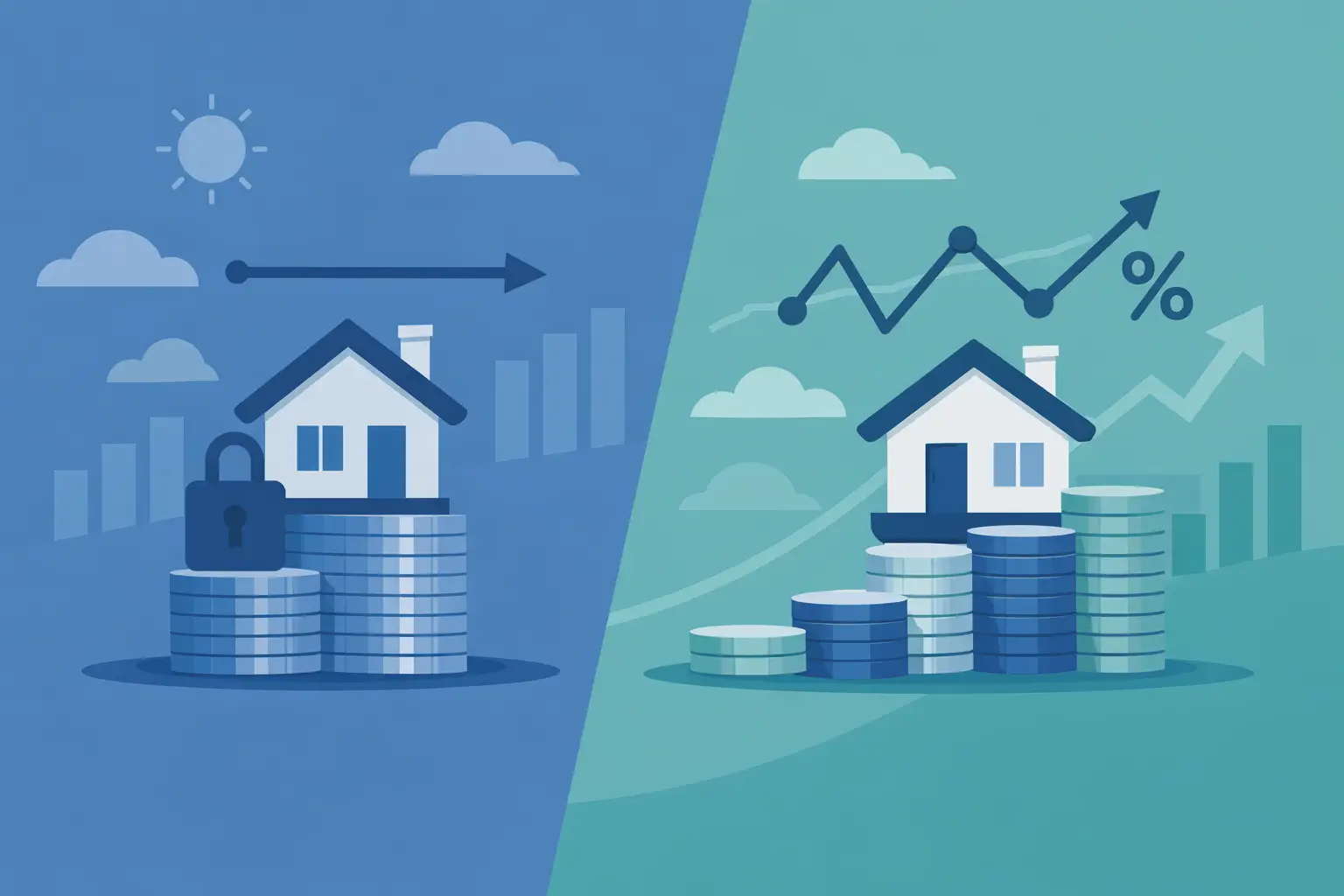
One loan gives you payment stability from day one. The other may start lower, then change with the market. That is the real decision in fixed rate vs adjustable mortgage choices, and it matters more than a lot of buyers realize. The right answer is not about picking the loan with the lowest opening rate. It is about matching your mortgage to your timeline, your budget, and your tolerance for change.
For many borrowers, this choice shapes not just the monthly payment, but how confident they feel buying a home in the first place. A mortgage should support your goals, not force you to gamble on rates, income, or future plans. That is why it helps to look past the headline rate and understand how each option actually works.
Fixed rate vs adjustable mortgage: what is the difference?
A fixed-rate mortgage keeps the same interest rate for the life of the loan. If you choose a 30-year fixed loan, your principal and interest payment stays consistent for 30 years. Taxes, insurance, and HOA dues can still change, but the core loan payment does not.
An adjustable-rate mortgage, or ARM, starts with a fixed rate for an initial period, often five, seven, or ten years. After that, the rate can adjust at scheduled intervals based on market conditions and the terms of the loan. That means your monthly principal and interest payment can go up or down over time.
On paper, the difference sounds simple. In practice, it comes down to certainty versus flexibility. A fixed rate protects you from future increases. An ARM may reward you with a lower starting rate, but it asks you to accept more uncertainty later.
When a fixed-rate mortgage makes more sense
A fixed-rate mortgage is usually the safer fit for borrowers who plan to stay in the home for a long time, want predictable housing costs, or simply do not want surprises. If your budget is tight and you need to know exactly what your payment will be year after year, fixed can be the stronger move.
This is especially true in a higher-rate environment when many buyers feel pressure to stretch. A fixed loan can still be the better answer if stability matters more than a short-term rate break. You are buying peace of mind along with the home.
Fixed rates also work well for first-time buyers who are already managing enough unknowns. New homeowners often underestimate how valuable predictability becomes once maintenance, utilities, and other ownership costs start showing up. With a fixed loan, at least one major piece of the budget stays steady.
There is a trade-off, of course. Fixed-rate mortgages often begin with a higher interest rate than ARMs. That can mean a higher payment upfront and, in some cases, slightly less purchasing power. But for many households, that higher starting cost is worth the long-term control.
When an adjustable-rate mortgage can be the smarter move
An ARM is not automatically risky, and it is not only for aggressive borrowers. In the right situation, it can be a smart, cost-conscious tool. If you know there is a good chance you will sell, refinance, or move before the adjustment period begins, the lower introductory rate may save you real money.
That scenario is common for buyers who expect a job relocation, plan to upgrade homes in a few years, or are purchasing a property they do not intend to keep long term. It can also make sense for high-income borrowers who want the lowest initial payment and have room in their budget if rates later rise.
Some borrowers also choose an ARM because they expect rates to fall and want to refinance before the first adjustment. That strategy can work, but it should not be your only plan. Refinance opportunities depend on market conditions, home value, credit profile, and qualifying income at the time. If those pieces do not line up, you need to be able to live with the ARM as it stands.
That is where a lot of borrowers get into trouble. They focus on the starting rate and ignore the future rate path. An ARM can be a strong option, but only when you understand both the benefit and the risk.
Fixed rate vs adjustable mortgage costs over time
The biggest mistake buyers make is comparing only the first monthly payment. The better question is what the loan will cost over the years you expect to own it.
If you keep a home for decades, a fixed-rate mortgage often delivers better value because it locks in your rate and shields you from future increases. Even if the starting rate is higher, the long-term predictability can protect your finances when the market changes.
If you own the home for a shorter period, an ARM may come out ahead because of the lower initial rate. Those early savings can be meaningful, especially on larger loan amounts. But the math depends on timing. If you stay longer than expected and rates adjust sharply upward, those savings can disappear fast.
This is why break-even thinking matters. You are not just choosing between two rates. You are choosing between two timelines. A mortgage should fit the life you are likely to live, not the best-case scenario you hope will happen.
How much risk is really in an ARM?
Not all ARMs are built the same. Some have adjustment caps that limit how much the rate can rise at the first change, at each later change, and over the life of the loan. Those details matter. They define the ceiling of your potential payment shock.
Even with caps, though, the risk is real. If your rate adjusts higher, your payment may increase at exactly the wrong time, when other household costs are also rising. If your income is variable, or if you already feel stretched at the initial payment, that risk deserves serious attention.
On the other hand, an ARM may feel less risky if your financial profile is strong. A borrower with substantial reserves, a high and stable income, or a clear exit plan may be in a better position to benefit from the lower starting rate without being exposed to the same level of stress.
The key is honesty. Do not choose an ARM because you are trying to force a home into your budget. Choose it only if the structure fits your plans and you can comfortably handle the loan if plans change.
Who should think carefully before choosing an ARM?
Borrowers with fixed incomes, minimal savings, or very little room in their monthly budget should be cautious. The same is true for first-time buyers who are stretching to qualify or households that rely on overtime, bonuses, or seasonal income to stay comfortable.
An ARM may also be a poor fit if you hate uncertainty. That sounds simple, but it matters. A mortgage is not just a financial decision. It is an emotional one. If the thought of future payment changes will keep you second-guessing your choice, the lower introductory rate may not be worth it.
For veterans, self-employed borrowers, and buyers using specialized loan programs, the right loan structure also depends on how income is documented, how long the property is likely to be held, and how much flexibility the overall loan package offers. Product matching matters as much as rate shopping.
How to choose with confidence
Start with your timeline. How long are you likely to keep the home? Not your dream scenario - your realistic one. Then look at your budget under both the starting payment and the possible future payment. If an ARM only works when everything goes right, it is probably the wrong loan.
Next, look at your broader strategy. Are you planning to refinance if rates improve? Are you buying a starter home? Are you prioritizing maximum stability because other parts of your finances already feel unpredictable? These answers point you toward the right structure faster than rate quotes alone.
This is also where a strong lending partner makes a difference. Borrowers do best when they have someone walking them through payment scenarios, adjustment caps, qualification options, and future refinance opportunities instead of just pushing the lowest advertised rate. At US Mortgages, that long-view approach matters because the best loan is not the one that closes fastest. It is the one that still feels right after the excitement of closing day is over.
A mortgage should give you leverage, not anxiety. If you want certainty, fixed is often the better foundation. If you have a short timeline and the financial room to handle change, an ARM may create savings. The smart move is the one that fits your life now and still makes sense if life gets messy later.