The difference between a 6.5% rate and a 7.0% rate can cost you hundreds each month and tens of thousands over the life of a loan. That is why home purchase mortgage rates matter so much when you are buying a home. They do not just affect whether you qualify. They shape your monthly payment, your buying power, and how comfortable your budget feels after closing.
A lot of buyers start with one question: What rate can I get? That is the right question, but it is not the only one. The better question is this: What rate and loan structure give me the best total outcome based on my income, credit, down payment, property type, and long-term plans?
What home purchase mortgage rates really mean
Your mortgage rate is the cost of borrowing money to buy a home, expressed as a percentage. It directly affects your principal and interest payment, but it also influences how much home you can afford and whether a lender can approve the loan within standard debt-to-income guidelines.
For example, if rates rise, your payment rises even if the home price stays the same. That can reduce your purchasing power fast. On the other hand, if you secure a lower rate, you may be able to keep your payment manageable, qualify more comfortably, or avoid stretching your budget.
That said, rate is not everything. Fees, discount points, mortgage insurance, loan term, and the type of mortgage all play a role. A lower advertised rate may come with upfront costs that do not make sense for every buyer. A slightly higher rate with lower fees can be the better deal, especially if you expect to refinance or move in a few years.
What affects home purchase mortgage rates
Mortgage rates are shaped by the market, but your personal profile matters too. Lenders price risk, and they also price loan characteristics.
Your credit score is one of the biggest factors. In general, stronger credit opens the door to more competitive pricing. A higher score can lower both the rate and the overall cost of financing. If your score is lower, you may still qualify, but the loan may price differently depending on the program.
Your down payment also matters. Buyers who put more money down often receive better pricing because the lender is taking on less risk. Still, that does not mean you need 20% down to buy. Many buyers qualify with far less, especially through FHA, VA, USDA, and certain conventional options. The trade-off is that lower down payment programs may include mortgage insurance or funding fees.
Loan type has a major impact as well. Conventional loans, FHA loans, VA loans, and USDA loans all follow different pricing rules. A VA loan may offer strong value for an eligible veteran with no down payment requirement, while FHA may be more forgiving on credit. Conventional financing may be ideal for a buyer with solid credit and a stable income profile. The best rate on paper is not always the best fit in practice.
Property type influences pricing too. A primary residence usually receives better pricing than a second home or investment property. Single-family homes often price differently than condos, multi-unit properties, or manufactured homes.
Then there is the market itself. Inflation, bond market activity, investor demand, and economic data all move rates. Mortgage rates can change daily, sometimes more than once in the same day. That is why quotes have expiration windows and why timing matters.
Why your quoted rate may not match the ad
Many buyers see a headline rate online and assume that is what they will get. Usually, it is not that simple.
Advertised rates often assume a very specific borrower profile - strong credit, low debt, a certain loan amount, a standard property type, and sometimes the payment of discount points. Once your actual file is reviewed, the pricing may adjust.
This is not necessarily a red flag. It is how mortgage pricing works. What matters is whether the lender clearly explains what is driving the rate, what fees are involved, and what options you have to improve the structure.
A trustworthy loan advisor should be able to walk you through scenarios. What happens if you raise your down payment? What if you choose a different loan program? What if you pay points, or choose not to? Clear answers matter more than a teaser number.
Fixed vs. adjustable rates for a home purchase
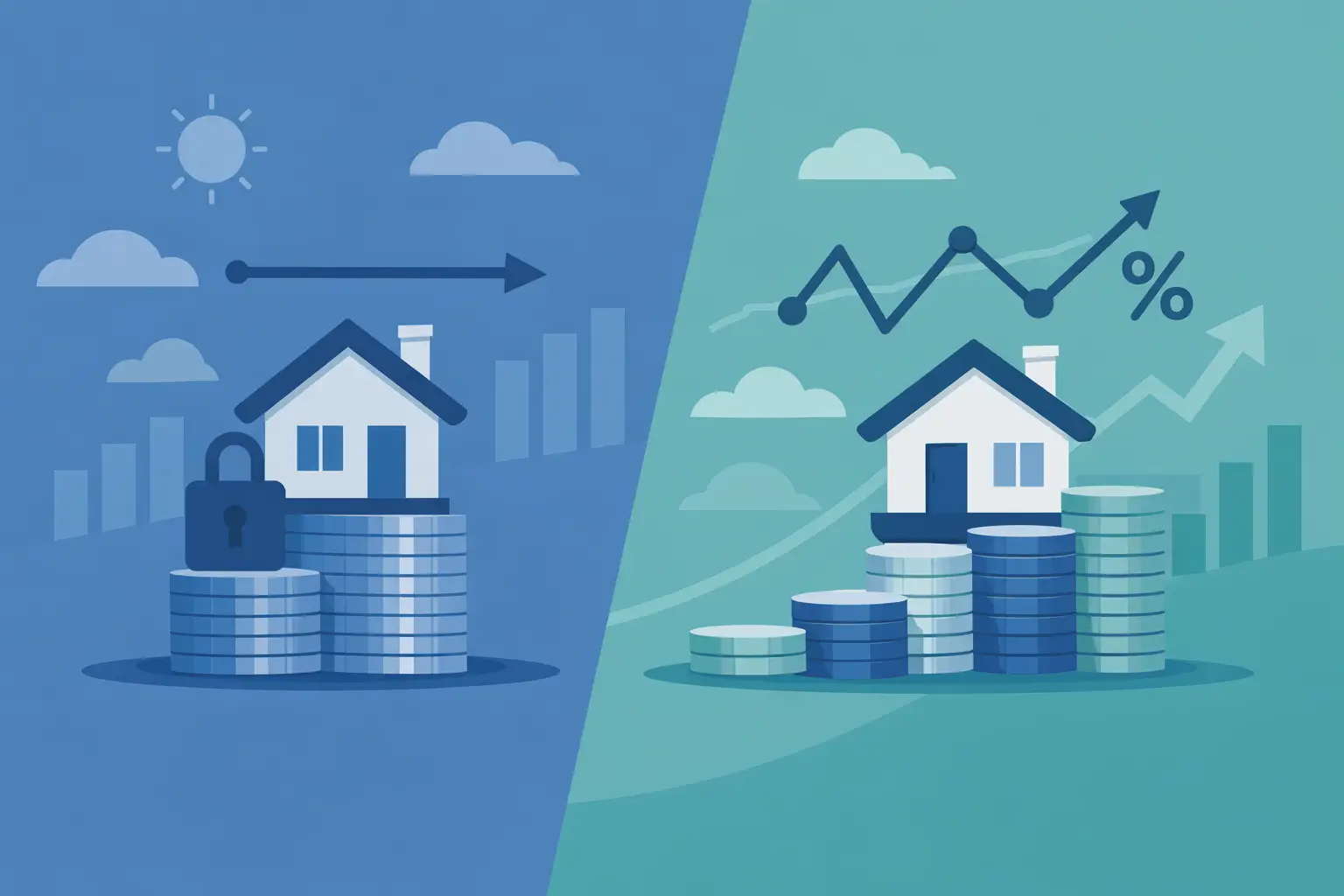
For most buyers, a fixed-rate mortgage is the straightforward option. The interest rate stays the same for the life of the loan, and your principal and interest payment remains stable. That predictability is valuable, especially if you plan to stay in the home long term or want certainty in your monthly budget.
An adjustable-rate mortgage, or ARM, may start with a lower initial rate for a set period and then adjust later based on the loan terms and market indexes. This can make sense for some borrowers, especially those who expect to move, sell, or refinance before the adjustment period begins. But there is a trade-off. If rates stay high or rise, future payments may increase.
There is no automatic winner here. A fixed rate offers stability. An ARM can offer short-term savings. The right choice depends on your timeline, income flexibility, and comfort with risk.
How to shop mortgage rates without wasting time
Rate shopping is smart. Chaos shopping is not.
Start by getting your financial documents organized. Lenders will usually need income documents, asset statements, identification, and details about debts and employment. If you are self-employed or use alternative income documentation, be ready for additional review. The more complete your file is, the more accurate your quote can be.
Next, compare the full loan picture, not just the interest rate. Ask about annual percentage rate, lender fees, discount points, mortgage insurance, estimated cash to close, and whether the quote is based on a locked rate or a floating rate. A lower interest rate with higher upfront costs may not save you money if you do not keep the loan long enough.
It also helps to compare quotes within a short time frame. Market conditions move quickly. Looking at one quote on Monday and another two weeks later may tell you more about the market than about the lender.
Most important, work with a lender that can match you to the right program. That matters even more if your income is nontraditional, your credit needs work, or another lender has already said no. Approval flexibility can be just as valuable as rate itself.
Ways to improve your rate before you buy
If you are a few months away from purchasing, small moves can make a real difference.
Paying down revolving debt may help your credit profile and improve debt-to-income ratios. Avoid opening new credit accounts unless necessary. Keep job and income documentation clean and consistent. Build reserves if you can. Even modest changes can improve pricing or strengthen approval options.
You can also think strategically about the structure of the deal. A larger down payment may improve pricing, but it is not always the right move if it drains your emergency savings. Paying discount points may reduce the rate, but only if the long-term savings justify the upfront cost. This is where borrower-specific guidance matters.
If rates improve after you buy, having a lender relationship that supports future savings can matter just as much as the initial loan. That is one reason some borrowers look beyond the first closing and consider whether the lender offers a practical path to refinance when the market shifts.
The best home purchase mortgage rates are the ones that fit your plan
A low rate is valuable, but only if the loan still fits your real life. The best mortgage is one you can qualify for confidently, afford comfortably, and use to move forward without unnecessary strain.
That may mean choosing a conventional loan for long-term savings. It may mean using FHA for flexibility. It may mean leaning on VA benefits you have earned. It may also mean working with a lender that can look beyond a narrow approval box and help you find a path where others create friction.
At US Mortgages, that borrower-first approach matters because buying a home should feel like progress, not guesswork. The right rate helps, but the right guidance is what turns a rate quote into a smart financial move.
If you are shopping for a home, do not stop at asking what the rate is today. Ask what loan structure protects your payment, supports your goals, and gives you room to breathe after you get the keys.