If you need cash for a renovation, debt payoff, emergency expense, or major life event, the HELOC vs personal loan decision can change both your monthly payment and your long-term financial flexibility. One option lets you tap your home equity, often with lower rates. The other gives you fast access to funds without putting your house on the line. The right answer depends on what you need, how much you want to borrow, and how comfortable you are using your home as collateral.
HELOC vs personal loan: the core difference
A HELOC, or home equity line of credit, is a revolving credit line secured by your home. You borrow against available equity, draw funds as needed during a set draw period, and usually make interest-only or low minimum payments at first. After that, the repayment period begins, and your payment can rise as principal and interest come due.
A personal loan is typically unsecured and delivered as a lump sum. You receive the money upfront, then repay it in fixed monthly installments over a set term. The rate is often fixed, the timeline is clear, and there are fewer moving parts.
That basic structure matters more than most borrowers realize. A HELOC is built for flexibility. A personal loan is built for predictability.
When a HELOC usually makes more sense
A HELOC tends to work best when you own a home with solid equity and want borrowing power you can use over time instead of all at once. Home improvements are a common example. If your contractor bills in phases or your project budget may shift, a revolving line can be more practical than taking one lump sum and guessing the exact amount upfront.
It can also make sense when the amount you need is larger. Because a HELOC is secured by your property, rates are often lower than personal loan rates, especially for well-qualified borrowers. That lower rate can translate into meaningful savings if you are borrowing a substantial amount and managing repayment carefully.
There is another advantage many borrowers overlook: you only pay interest on what you actually draw, not on the full approved line. If you are approved for $80,000 but use only $25,000, your costs reflect the $25,000 balance, not the maximum limit.
That said, the lower rate comes with a higher-stakes trade-off. Your home secures the loan. If repayment becomes a problem, the consequences are more serious than falling behind on an unsecured loan.
HELOC strengths
A HELOC is often strongest for homeowners who want flexible access to funds, may need a larger credit line, and can benefit from lower interest rates tied to home equity. It is especially appealing for renovation plans that may improve the value of the property you are borrowing against.
Where borrowers get caught off guard
The biggest surprise is usually payment shock. Many HELOCs have variable rates, which means your payment can change when market rates move. On top of that, once the draw period ends, repayment can shift from lower interest-focused payments to much higher fully amortizing payments. If your budget is tight, that transition matters.
When a personal loan is the better fit
A personal loan is often the cleaner choice when speed, simplicity, and payment certainty matter most. If you need a set amount for medical bills, a wedding, relocation, or a short-term financial gap, a fixed-rate personal loan can be easier to budget around.
It is also a strong option if you either do not own a home, do not have enough usable equity, or simply do not want to tie new debt to your property. Many borrowers prefer the peace of mind that comes from knowing their home is not part of the equation.
For smaller borrowing needs, a personal loan can be especially efficient. You get the full amount at closing, the term is defined from day one, and there is no draw period to manage. In many cases, funding is faster too, since there is no property-based underwriting process like there is with a HELOC.
Personal loan strengths
A personal loan stands out when you want fixed monthly payments, a predictable payoff date, and no lien against your home. It can be a smart move for borrowers who value control and want to avoid the complexity of a revolving credit line.
Where the cost can rise
The main downside is usually rate and loan size. Because most personal loans are unsecured, lenders take on more risk. That often means higher rates than a HELOC, particularly for borrowers with average credit. Loan amounts may also be lower than what a homeowner could access through home equity.
HELOC vs personal loan on rates, payments, and risk
If your top priority is getting the lowest possible rate, a HELOC often has the edge. Secured debt usually costs less than unsecured debt. But lower starting rates do not always mean lower total cost. If the HELOC has a variable rate and rates rise, your payment can climb over time.
If your top priority is a stable monthly budget, a personal loan often wins. Fixed payments can make planning easier, especially if you are already balancing mortgage payments, credit cards, insurance, and everyday expenses.
Risk is where the difference becomes personal. With a personal loan, default can still damage your credit and trigger collection activity, but your home is not the collateral. With a HELOC, you are using one of your biggest assets to secure the debt. That does not make a HELOC bad. It means the loan should match a clear purpose and a realistic repayment plan.
How to decide based on your goal
The smartest borrowing decision usually starts with the use of funds.
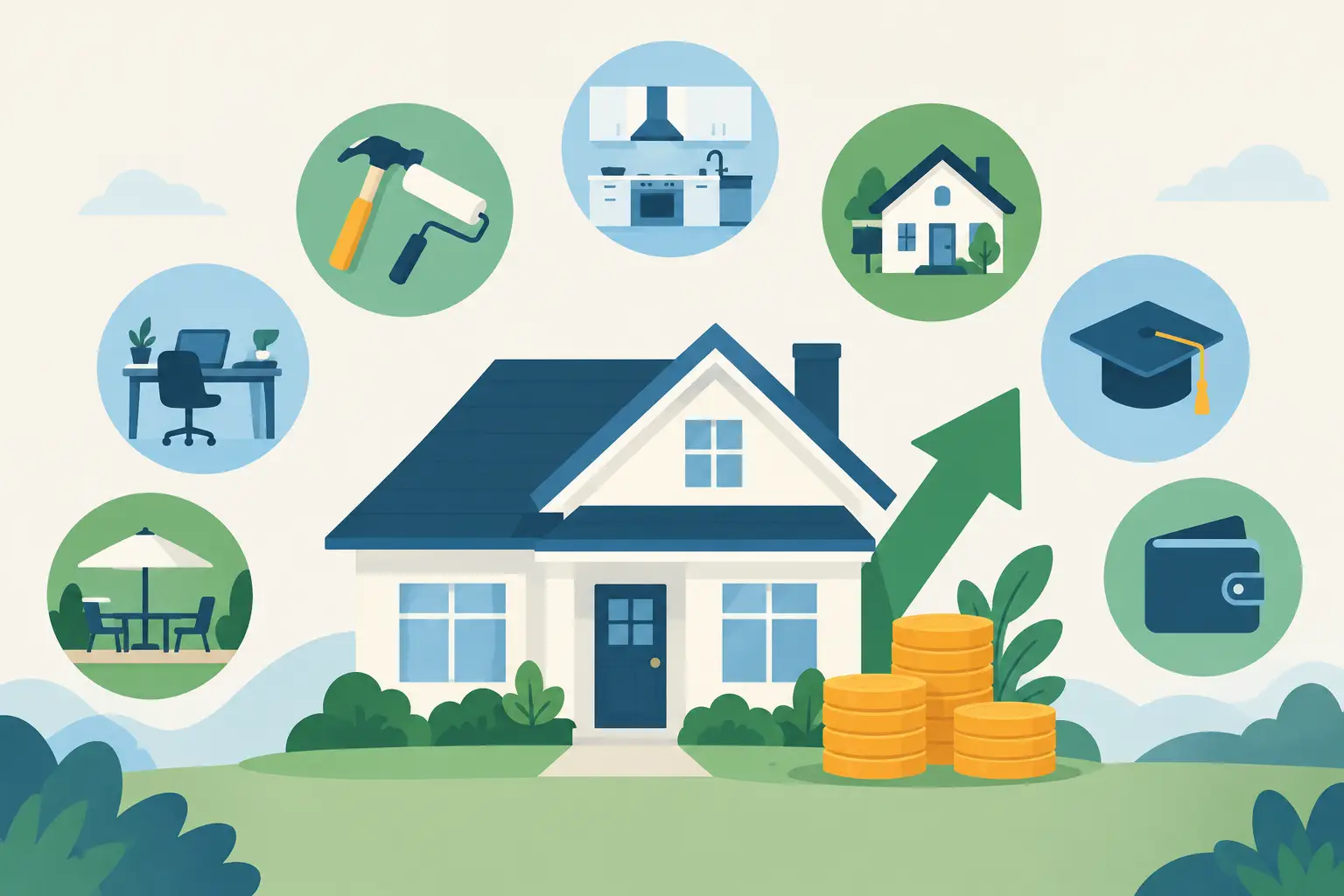
If you are upgrading your kitchen, replacing a roof, or handling a multi-stage home project, a HELOC often fits better because it aligns with ongoing expenses and may offer lower financing costs.
If you are consolidating a modest amount of high-interest debt and want one fixed payment, a personal loan may be easier to manage. If you need money quickly for an immediate expense and do not want to wait through a home equity approval process, a personal loan can also be the better route.
If you need a large amount and have strong equity, a HELOC may give you more room to work with. If you need a smaller amount and want a clean payoff schedule, a personal loan is often more straightforward.
Questions to ask before you choose
Before you move forward, look beyond the advertised rate. Ask whether the rate is fixed or variable, how long repayment lasts, whether there are closing costs or annual fees, and what your payment could look like in different scenarios. A lower initial rate does not help much if the payment becomes uncomfortable later.
Also ask yourself how disciplined your borrowing habits are. A personal loan gives you a fixed amount and a finish line. A HELOC gives you ongoing access to credit, which can be useful, but it can also tempt some borrowers to keep spending without a firm payoff strategy.
This is where experienced guidance matters. The best loan is not the one with the flashiest headline rate. It is the one that supports your goal, protects your cash flow, and still makes sense six months from now.
A practical rule of thumb
Choose a HELOC if you are a homeowner with available equity, need flexibility or a larger borrowing limit, and are comfortable with the fact that your home secures the line. Choose a personal loan if you want fast funding, fixed payments, and a simpler structure with no home collateral.
For many homeowners, the right path comes down to balancing cost against certainty. Lower rates can save money, but predictability has value too. A confident borrowing decision is not about picking the universally better product. It is about choosing the financing tool that actually fits your situation.
If you are weighing home equity options, take the time to run real numbers, not rough guesses. A strong lending partner can help you compare payment scenarios clearly and avoid surprises later. That is how you borrow with confidence and keep your options working for you, not against you.