Buying a home gets expensive fast, and not just because of the purchase price. The loan you choose affects your down payment, monthly payment, closing costs, mortgage insurance, and how much flexibility you have if your income does not fit a standard box. That is why understanding different financing options for buying a home matters before you make an offer, not after.
The right mortgage is not always the one with the lowest advertised rate. It is the one that fits your credit profile, income type, savings, property goals, and timeline. Some buyers need the smallest possible down payment. Others want to avoid mortgage insurance, qualify with self-employed income, or buy in a rural area. A smart financing strategy starts with the full picture.
Different financing options for buying a home
Most homebuyers fall into one of two groups. Either you fit cleanly into agency guidelines and want the best pricing available, or you need a loan with more flexibility because your credit, income, property type, or loan size falls outside the usual mold. The good news is that there are solid options in both camps.
Conventional loans
Conventional loans are often the first place to look for buyers with decent credit, stable income, and a manageable debt-to-income ratio. These loans are not backed by the government, which usually means the lender and investor guidelines are a little stricter than FHA, VA, or USDA.
For many borrowers, conventional financing offers strong long-term value. If you put less than 20% down, you will usually pay private mortgage insurance, but unlike FHA mortgage insurance, that coverage can often be removed later once you build enough equity. That can lower your monthly payment over time.
Conventional loans can work especially well for buyers who want competitive pricing and plan to stay financially disciplined. But if your credit score is bruised or your income has recent gaps, approval can get harder.
FHA loans
FHA loans are built for accessibility. They are popular with first-time buyers because they allow lower down payments and more forgiving credit standards than many conventional programs.
If you have limited savings or a less-than-perfect credit history, FHA can be the difference between waiting years and buying now. The trade-off is mortgage insurance. FHA loans charge both an upfront mortgage insurance premium and an ongoing monthly premium in many cases, which raises the total cost of borrowing.
That does not make FHA a bad deal. It makes FHA a practical tool. For buyers who need a path into homeownership now, the extra cost can be worth it.
VA loans
For eligible veterans, active-duty service members, and some surviving spouses, VA loans are one of the strongest financing tools available. They often require no down payment, have no monthly mortgage insurance, and can offer favorable rates.
That combination can dramatically reduce the cash needed to buy a home. For many military borrowers, VA financing creates more buying power and lower monthly housing costs than other loan types.
There is still a funding fee in many situations, although some borrowers are exempt. And while VA loans are powerful, not every property or situation is equally simple. A lender that understands the program well can make a major difference in speed and execution.
USDA loans
USDA loans are designed for eligible rural and some suburban areas, and they can be an excellent fit for buyers who meet the income and property requirements. Like VA loans, they may allow no down payment, which is a major advantage for buyers who have good income but limited cash reserves.
The catch is that USDA has location restrictions and household income limits. Some buyers assume they will not qualify because they are not buying farmland or moving far from a city center. In reality, many qualifying areas are more accessible than people expect.
USDA financing can be a strong option if the home and the household both meet the rules. If not, another program may get you to the closing table faster.
Which home financing option fits your situation?
Loan shopping should start with your borrower profile, not a generic rate ad. The same homebuyer can qualify for multiple loan types, but the best fit depends on what problem you need the loan to solve.
If your goal is low cash to close, FHA, VA, and USDA may deserve an early look. If your priority is avoiding long-term mortgage insurance, conventional or VA may be stronger. If you are borrowing above standard conforming loan limits, jumbo financing enters the conversation. And if your tax returns do not fully reflect your income, alternative documentation may be the better path.
Jumbo loans
Jumbo loans are for higher-priced homes that exceed conforming loan limits. Because these loans are larger and carry more risk for lenders, qualification standards are usually tighter. Expect stronger credit requirements, larger reserve requirements, and often a bigger down payment.
That said, jumbo financing is not just for luxury buyers with flawless profiles. It is simply the financing category for larger loan amounts. In high-cost markets, many ordinary owner-occupied purchases fall into jumbo territory.
The benefit is straightforward: jumbo loans let qualified buyers finance homes that would otherwise be out of reach under standard agency limits. The trade-off is that documentation and underwriting can be more demanding.
Non-QM and alternative income loans
Some buyers earn plenty of money but struggle to prove it using traditional documentation. That happens often with self-employed borrowers, business owners, freelancers, contractors, and commission-based professionals. If your tax strategy reduces taxable income, a standard conventional loan may understate your real purchasing power.
This is where non-QM and alternative income programs can help. Bank statement loans, for example, may qualify borrowers based on cash flow reflected in personal or business bank statements rather than tax returns alone. Other programs may use asset depletion or alternative documentation methods.
These loans can be a lifeline for strong borrowers who have been declined elsewhere for technical reasons, not true affordability problems. Still, flexibility usually comes at a cost. Rates and fees may be higher than conventional financing, and reserves or down payment requirements can be steeper. But for many buyers, a realistic approval path is more valuable than chasing a rate on a loan they cannot actually qualify for.
Fixed-rate vs. adjustable-rate mortgages
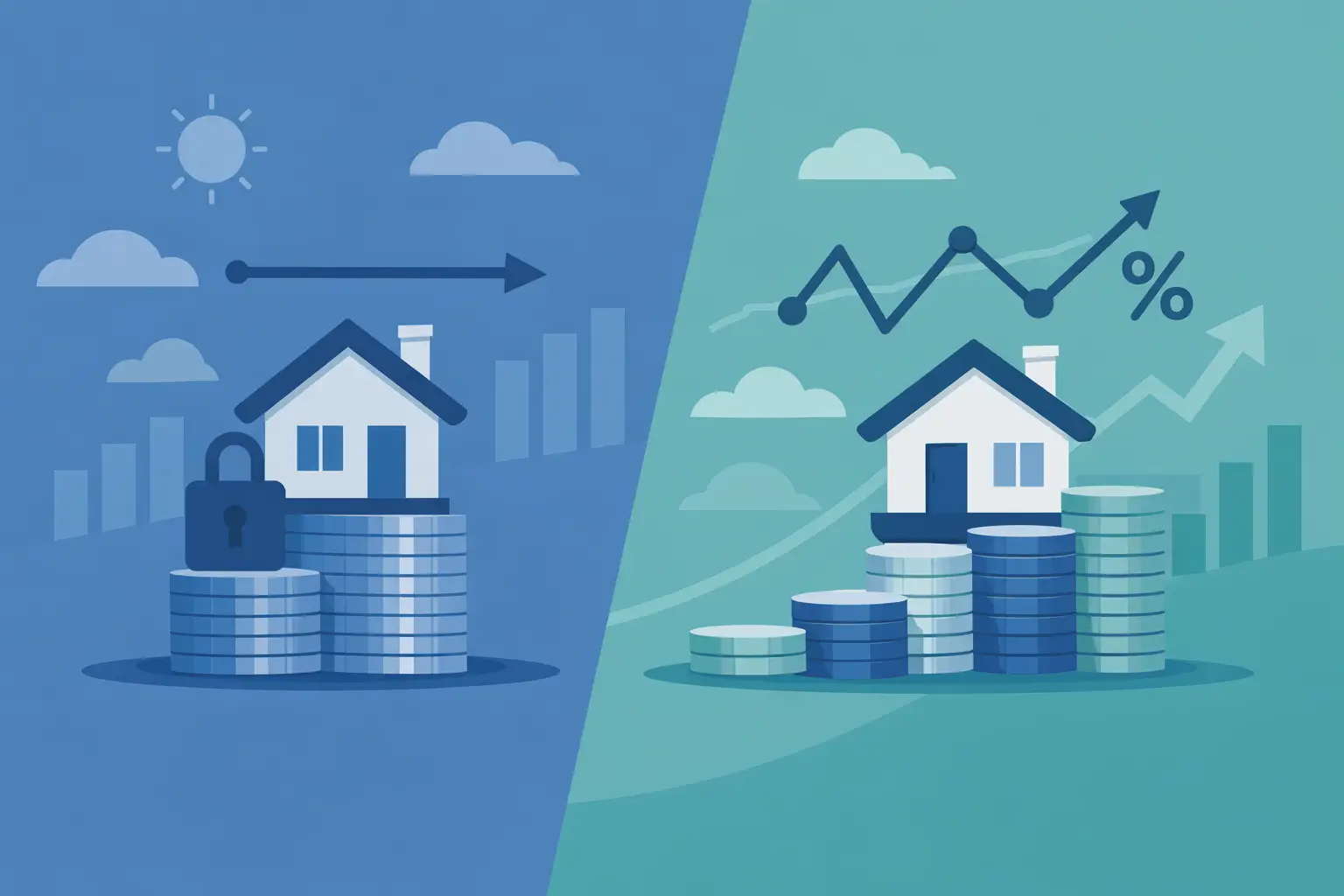
This is not a separate loan program so much as a loan structure choice, but it matters. A fixed-rate mortgage keeps the same interest rate for the life of the loan. That gives payment stability and predictability, which many buyers value.
An adjustable-rate mortgage starts with a fixed period, then the rate can change based on market conditions. ARMs can make sense if you expect to move, refinance, or pay off the loan before the adjustment period begins. They can also help buyers lower the initial payment.
The trade-off is obvious. Lower upfront cost can mean more future uncertainty. If your budget has little room for payment increases, fixed may be the safer route.
What buyers often miss when comparing financing options
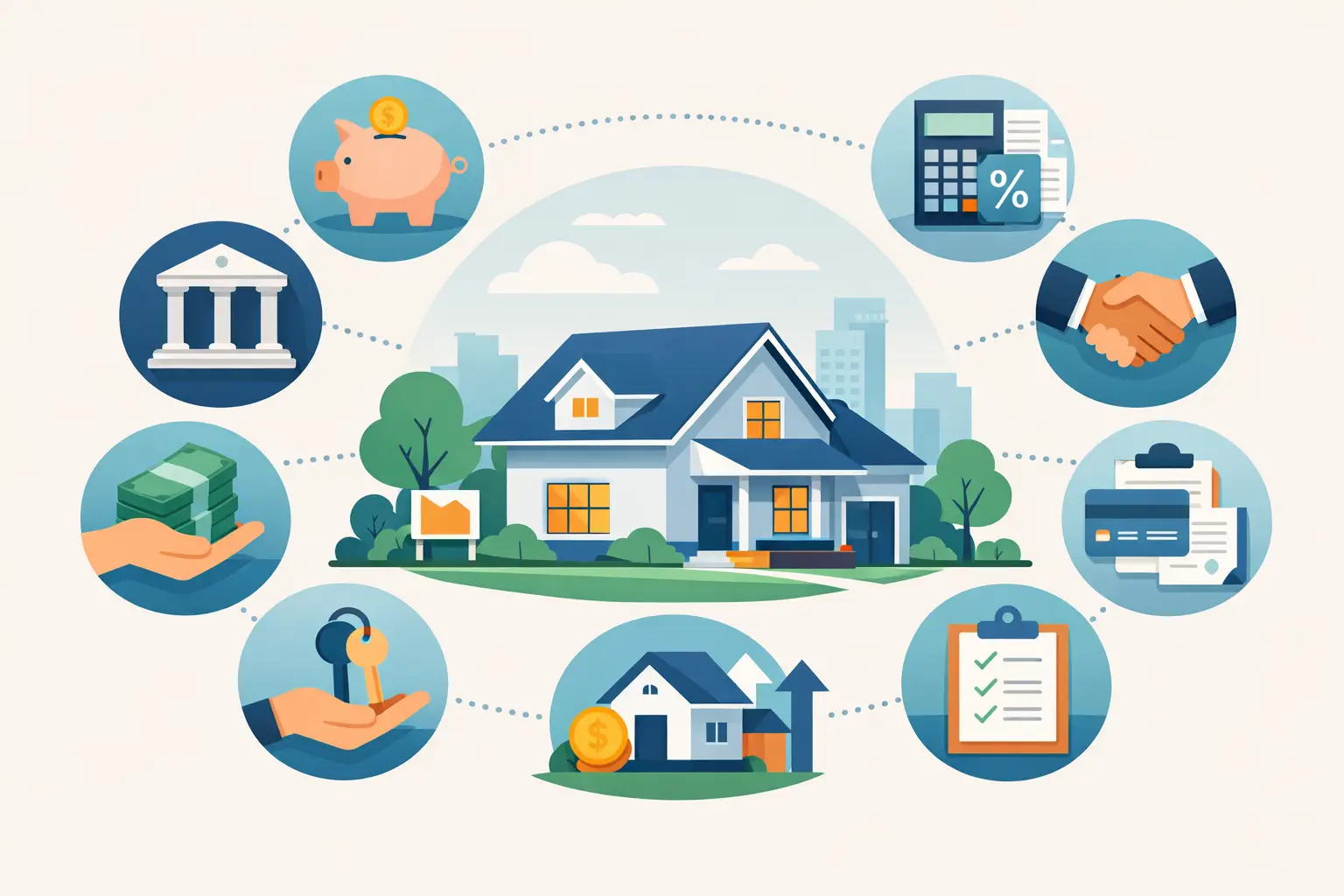
Too many buyers compare loans based on interest rate alone. That is a mistake. The real comparison should include down payment, mortgage insurance, cash to close, payment stability, and how easy the loan will be to refinance later.
For example, one loan may offer a slightly lower rate but require expensive monthly mortgage insurance that sticks around for years. Another may have a higher rate today but create a cleaner path to lower costs later. If rates fall, refinance terms matter too. A lender relationship can have long-term value when it lowers future friction and expense.
This is one reason many buyers look for more than a transaction. They want a lending partner that can help them close now and save later if the market changes. US Mortgages has built that message into its Lowest Rate for Life™ approach, which speaks directly to borrowers who want both immediate financing options and a practical plan for future rate drops.
The best loan is the one that gets approved cleanly
There is a difference between a loan you like on paper and a loan that closes on time. Sellers care about certainty. So should buyers. If your file is complex, the most attractive financing option may not be the one with the flashiest marketing. It may be the one aligned with your real documentation, credit, and timeline.
A fast pre-approval based on actual review, not guesswork, can save you from missed deadlines, contract stress, and last-minute surprises. That matters just as much as rate.
Different financing options for buying a home give buyers more control than most people realize. Whether you need low down payment access, military benefits, rural eligibility, a larger loan amount, or flexible income documentation, there is usually more than one path forward. The smart move is to match the loan to your life now, while keeping an eye on how it will serve you later.