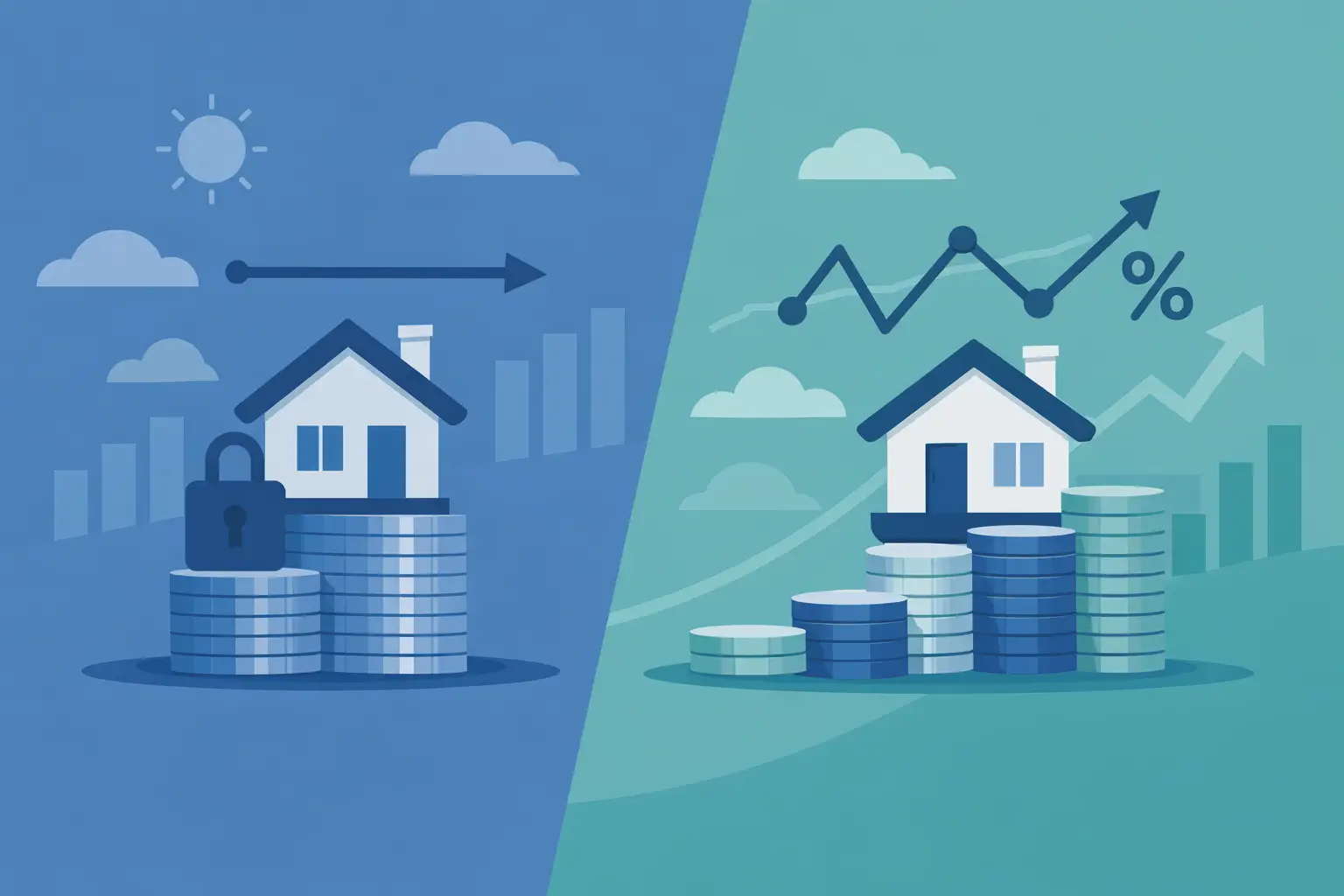
You may have plenty of equity in your home and still be unsure how to use it without making the wrong move. That is exactly why the question of heloc vs cash out refinance matters. Both options let you turn home equity into usable funds, but they work very differently, and the better choice depends on your rate, your goals, and how long you plan to keep the loan.
For many homeowners, this is not just a math problem. It is a timing problem, a cash flow problem, and sometimes a long-term savings problem. If you choose the wrong option, you could end up replacing a great first mortgage with a more expensive one or taking on a payment structure that does not fit how you actually borrow.
HELOC vs cash out refinance: the core difference
A HELOC is a home equity line of credit. It usually works as a second mortgage that sits behind your current first mortgage. You keep your existing primary loan in place and open a revolving credit line based on your available equity. You can draw from it as needed during the draw period, and your payment may change depending on your balance and the interest rate.
A cash out refinance replaces your current mortgage with a new, larger loan. The difference between what you owe now and the new loan amount comes back to you as cash at closing. Instead of adding a second loan, you roll everything into one new mortgage with one monthly payment.
That difference drives almost every decision that follows. If your current first mortgage has a very low fixed rate, a HELOC can help you access equity without giving up that rate. If your current mortgage rate is high, a cash out refinance may let you tap equity while also improving the terms on your first mortgage.
When a HELOC usually makes more sense
A HELOC tends to work well when you need flexibility more than a lump sum. If you are paying for a remodel in phases, covering tuition over time, or keeping a credit line available for emergencies, a HELOC can be more practical than borrowing everything upfront.
It also tends to make sense when your existing first mortgage is too good to disturb. Many homeowners locked in rates that are hard to beat. In that case, replacing the first mortgage through a cash out refinance could raise the rate on the entire balance, not just the amount of equity you want to use. That can be an expensive trade.
Another advantage is borrowing control. With a HELOC, you usually pay interest only on the amount you actually draw, not the full approved line. That can lower your initial cost if you do not need all the money at once.
The trade-off is rate volatility. Most HELOCs have variable rates, so the payment can rise if market rates move up. That uncertainty matters, especially if you are stretching your monthly budget already.
Best fit scenarios for a HELOC
A HELOC is often the stronger option if you have a low first mortgage rate, need funds over time rather than all at once, or want a backup source of liquidity without immediately taking on a large fully amortized payment.
It can also help borrowers who do not want to reset their mortgage term. If you are already several years into a 30-year mortgage, refinancing into a fresh new loan may mean paying interest over a longer timeline unless you choose a shorter term and can handle the payment.
When a cash out refinance usually makes more sense
A cash out refinance is often better when you need a large lump sum and want predictable repayment. Because it replaces your first mortgage, the new loan is typically a fixed-rate mortgage with stable monthly principal and interest payments. That predictability is appealing for major goals such as debt consolidation, a large renovation, or a major one-time expense.
It can also be the stronger move when current refinance terms are better than what you already have. If your existing mortgage rate is relatively high, replacing it may help you accomplish two goals at once - access equity and improve your mortgage structure.
Some homeowners also prefer the simplicity of one loan instead of two. A cash out refinance leaves you with one mortgage payment instead of a first mortgage plus a HELOC payment.
The downside is that you are refinancing the whole balance, not just the amount of cash you need. If most of your current mortgage carries a lower rate than what is available now, that can work against you.
Best fit scenarios for a cash out refinance
A cash out refinance often fits best when you need all the proceeds upfront, want a fixed rate, or would benefit from replacing your current mortgage terms. It can also be useful if you want to consolidate higher-interest debt into one structured monthly payment, though that only works well if you avoid running those balances back up.
Costs, rates, and payments: where the real comparison happens
The biggest mistake homeowners make in the HELOC vs cash out refinance decision is focusing only on the advertised rate. The better question is total cost relative to your goal.
A HELOC may carry lower upfront costs than a cash out refinance, depending on the lender and structure. But because many HELOCs have variable rates, the long-term cost is less predictable. If rates rise, your payment can rise with them.
A cash out refinance may involve more closing costs because you are replacing the first mortgage. But if the new rate is competitive and the loan structure is better aligned with your plans, the total financial outcome may still be stronger.
Payment structure matters just as much. A HELOC may offer interest-only payments during the draw period, which can help short-term cash flow. But when repayment begins, the payment may jump. A cash out refinance usually starts with a fully amortizing payment right away, which can be higher initially but more stable over time.
This is where a borrower-first review matters. You want to compare not just rates, but also payment behavior, closing costs, term length, and the opportunity cost of replacing your current first mortgage.
The mortgage rate you already have matters more than most people think
If you already have a first mortgage with an excellent fixed rate, that rate is an asset. Giving it up should require a clear financial benefit. In that situation, a HELOC often deserves serious consideration because it lets you preserve favorable financing on the bulk of your loan balance.
On the other hand, if your current rate is high, your loan term no longer fits your needs, or you want to restructure monthly payments while pulling equity out, a cash out refinance can be the cleaner and more effective solution.
This is where experienced guidance can save real money. A lender should model both paths, not push one product by default. At US Mortgages, that kind of side-by-side evaluation matters because the right equity strategy is the one that supports both your current goal and your long-term savings.
How to decide between a HELOC and cash out refinance
Start with your purpose. If your project or expense will happen in stages, flexibility has value and a HELOC may be the better fit. If you need a defined amount right now and want stable monthly repayment, a cash out refinance may line up better.
Then look at your current first mortgage. This is the pivot point. A low existing rate often tilts the decision toward a HELOC. A less favorable existing mortgage may make refinancing more attractive.
Next, pressure-test your monthly budget. Can you handle a HELOC payment if rates rise? Would a fully amortized refinance payment feel safer, even if it starts higher? The right answer is not always the lowest initial payment. It is the payment you can manage comfortably over time.
Finally, think about how long you will keep the loan. If you may sell soon, the cost structure and break-even timeline matter. If this is a long-term home, stability and cumulative interest cost deserve more attention.
Which option is better?
There is no universal winner in heloc vs cash out refinance. The better option is the one that matches your current mortgage, your cash needs, and your tolerance for payment changes.
If preserving a low first mortgage rate is the priority and you want flexible access to funds, a HELOC often has the edge. If you want one new loan, fixed payments, and a lump sum for a clear purpose, a cash out refinance is often the better tool.
Home equity can create opportunity, but only if the financing matches the plan. Before you move forward, make sure you are not just accessing cash - you are protecting the value of the mortgage position you already have and choosing a path that still makes sense a year from now.