Can self employed get mortgage approval? Yes. Running your own business does not put homeownership out of reach. It simply means a lender must look beyond a standard W-2 to verify that your income is stable, sufficient, and likely to continue. With the right documentation and the right loan match, self-employed buyers can purchase a home, refinance, or access equity with confidence.
The frustration often starts when a successful business owner is told that strong deposits, healthy revenue, or a high credit score alone are not enough. Mortgage underwriting is built around documented qualifying income, not just what comes into an account. The good news is that there are several ways to document that income, including options designed for borrowers whose tax returns do not tell the whole story.
Can Self-Employed Get Mortgage Approval? What Lenders Review
Most mortgage programs consider you self-employed when you own 25% or more of a business. That can include sole proprietors, freelancers, independent contractors, consultants, partners, S corporation owners, and LLC owners. You may earn a substantial income, but the lender still needs a clear, supportable picture of your finances.
For a conventional, FHA, VA, or USDA mortgage, lenders commonly review your personal federal tax returns and, depending on the business structure and ownership percentage, business tax returns as well. Two years of self-employment history is often preferred. A shorter history may be acceptable when you have prior experience in the same field, but approval depends on the overall file.
Underwriters also evaluate your credit profile, monthly debts, available assets, down payment, and the property itself. They are looking for consistency. An income figure that rises steadily over two years is generally easier to use than one that swings sharply from year to year. Declining income is not an automatic denial, but it may reduce the amount you can qualify to borrow.
A mortgage approval is based on more than gross business revenue. Lenders calculate qualifying income after reviewing allowable expenses, depreciation, business use of home deductions, depletion, and other tax-return items. Some deductions can be added back, while others cannot. This is why a business that generates strong cash flow may still show lower mortgage-qualifying income on paper.
Tax Returns Are Not the Only Path
Traditional financing is an excellent fit for many self-employed borrowers, especially those with solid tax returns and a stable two-year income history. But it is not the only option. If your accountant correctly maximizes deductions, your taxable income may not reflect your actual ability to make a mortgage payment.
Bank statement loan programs can offer a practical alternative for qualifying self-employed buyers. Rather than relying solely on tax returns, these programs analyze 12 or 24 months of personal or business bank statements to establish income. The lender reviews deposit patterns, business expense factors, credit, assets, and the loan scenario to determine eligibility.
This approach can be especially useful for business owners with strong deposits, contractors with variable income, real estate professionals, physicians with private practices, and entrepreneurs whose write-offs are substantial. It is not a shortcut around underwriting. Bank statement loans still require documented income, and rates, down payments, reserve requirements, and credit standards may differ from conventional loans. The advantage is that the documentation method may better reflect how your business actually earns money.
Other alternative-income options may be available for certain borrowers, depending on their income source, property type, occupancy, and financial profile. The best loan is not always the one with the lowest advertised rate. It is the loan that gives you a sustainable payment, credible approval path, and terms that support your longer-term plans.
Documents That Strengthen Your Mortgage File
Preparation helps self-employed borrowers avoid delays and preventable surprises. Before you shop for a home or submit a refinance application, gather the records that show how your business operates and how you are paid.
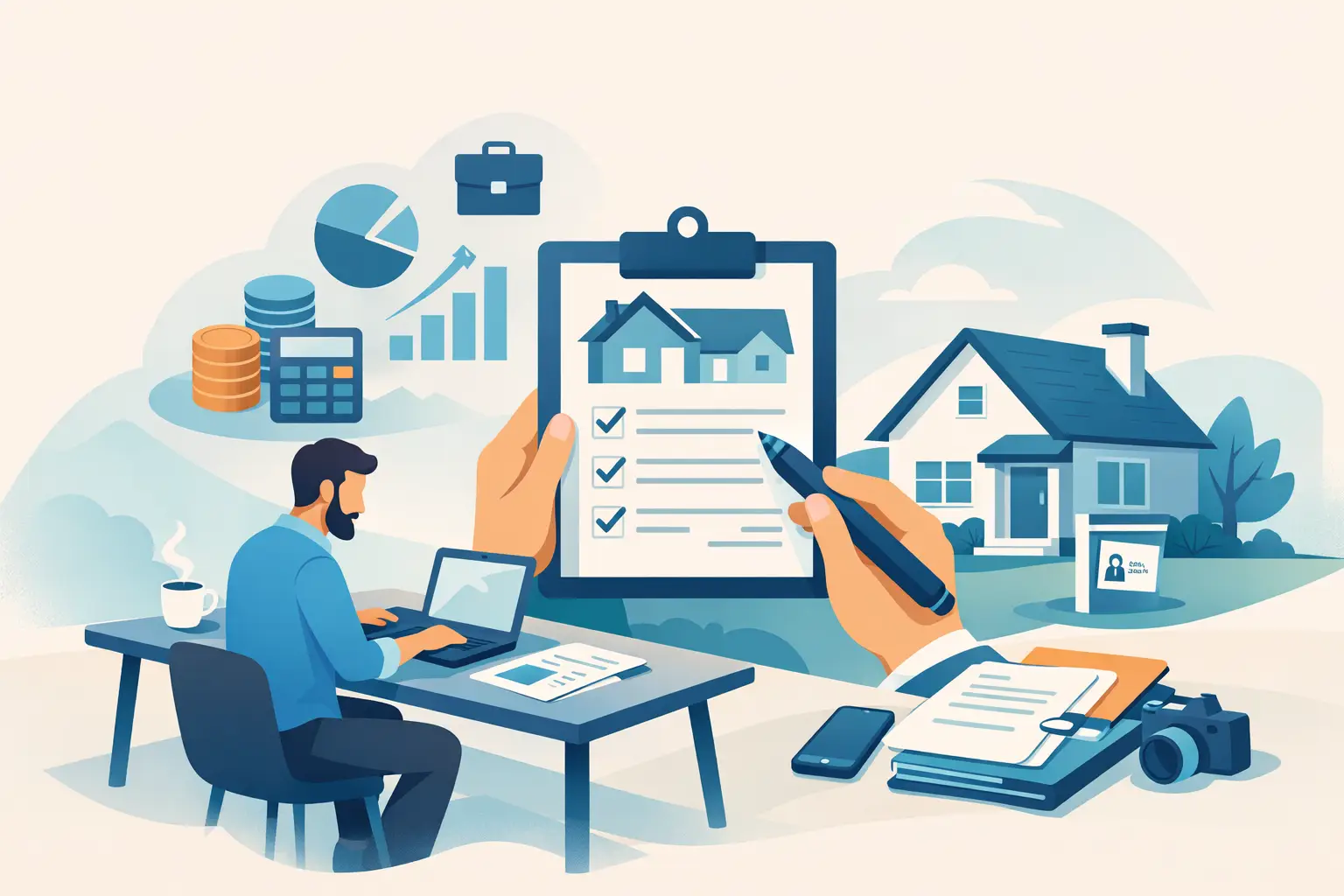
For many mortgage applications, you can expect to provide personal tax returns, business tax returns when required, recent bank statements, a year-to-date profit and loss statement, and a current balance sheet. Lenders may also request business licenses, proof of business ownership, 1099s, invoices, or letters from an accountant. If you are using assets for a down payment or closing costs, be ready to document the source of large deposits.
Accuracy matters as much as volume. A clean, current profit and loss statement that aligns with your bank activity and tax records can make underwriting easier. Avoid submitting estimates that cannot be supported. If your income has changed recently, explain why with documentation. For example, a signed contract, recurring client agreement, or evidence of expansion may help provide context, though it does not replace qualifying income requirements.
Keep personal and business finances as separate as possible. Commingled accounts can make it harder to identify business revenue, expenses, and available personal funds. Clear records give an underwriter fewer questions to resolve and give you a stronger position when timing matters.
Improve Your Position Before You Apply
You do not need a perfect financial profile to qualify, but a few smart moves can improve your options. Start by reviewing your credit reports and paying down revolving balances where possible. Lower credit card balances may improve both your credit score and your debt-to-income ratio.
Next, resist taking on new debt before closing. A new vehicle loan, equipment financing, personal loan, or large credit card purchase can change your approval numbers. Continue making all payments on time, and avoid moving money between accounts without maintaining a clear paper trail.
Your down payment also affects the loan conversation. A larger down payment can reduce the loan amount, improve pricing, and create more flexibility in some alternative-income programs. That said, putting every available dollar into the down payment is not always wise. Lenders may require cash reserves, and business owners should retain enough liquidity to manage normal operating needs.
It is also worth speaking with your tax professional before year-end if you plan to buy a home soon. Aggressive deductions may lower your tax bill, but they can also lower the income a traditional mortgage lender can use. There is no one-size-fits-all answer. The right tax strategy depends on your business, purchase timeline, cash position, and financing goals.
Choose a Loan That Fits the Way You Earn
A self-employed borrower may qualify for a conventional loan, FHA loan, VA loan, USDA loan, jumbo loan, bank statement loan, or another specialized option. Eligibility depends on the full picture, not just employment status.
Veterans and eligible service members may find that VA financing offers an especially valuable path, often with no down payment requirement and no monthly mortgage insurance. FHA financing can help buyers who need more flexible credit or down payment standards. Conventional financing can be highly competitive for borrowers with strong credit, documented taxable income, and adequate assets.
If traditional underwriting does not capture your financial strength, do not assume the answer is no. It may mean the first lender only offered one way to qualify. A lender with broader product options can compare income documentation methods and identify whether bank statements or another alternative approach makes more sense for your situation.
US Mortgages helps borrowers evaluate conventional and specialized financing without forcing a self-employed income profile into the wrong program. For eligible borrowers, the Lowest Rate for Life™ program also creates a longer-term refinance opportunity when market rates fall and program requirements are met. Your mortgage should support both the purchase you are making now and the financial flexibility you may need later.
Questions Self-Employed Borrowers Ask
How long do I need to be self-employed to get a mortgage?
Two years is the common benchmark, particularly for standard loan programs. However, one year may be considered in certain cases when you have a documented history in the same industry before becoming self-employed. The strength of your credit, assets, and income trend can influence the decision.
Can I qualify if my income is seasonal or inconsistent?
Possibly. Lenders typically average income over time and look for a stable or improving pattern. Seasonal businesses are not automatically excluded, but you will need records that demonstrate reliable earnings across the review period.
Do business deductions hurt mortgage approval?
They can reduce the taxable income used for qualification, although some deductions may be added back under program guidelines. This is exactly why a careful income review should happen before you begin making offers on homes.
Can I use business funds for a down payment?
In many cases, yes, if the withdrawal is properly documented and does not negatively affect the business. The lender may review business bank statements and verify that the funds are available without creating financial strain for the company.
A self-employed mortgage does require more documentation, but it should not require you to settle for less home, less clarity, or less support. Start early, organize your records, and get your income reviewed before you fall in love with a property. A clear approval strategy can turn the question from “Can I qualify?” into “Which home is right for me?”