Your home equity can be a powerful financial resource, but it is not free money. The top uses for HELOC funds are the ones that solve a real need, improve your financial position, or create lasting value without putting your household budget under unnecessary pressure. A home equity line of credit can offer flexible access to funds, yet your home serves as collateral. That makes the plan behind the borrowing just as important as the rate.
A HELOC works differently than a traditional lump-sum loan. You are approved for a credit limit, then draw funds as needed during the draw period. You generally pay interest only on the amount you use. This can make a HELOC an efficient option for expenses that arrive in stages, provided you understand the variable-rate structure, repayment terms, and total cost of borrowing.
1. Home Improvements That Add Function and Value
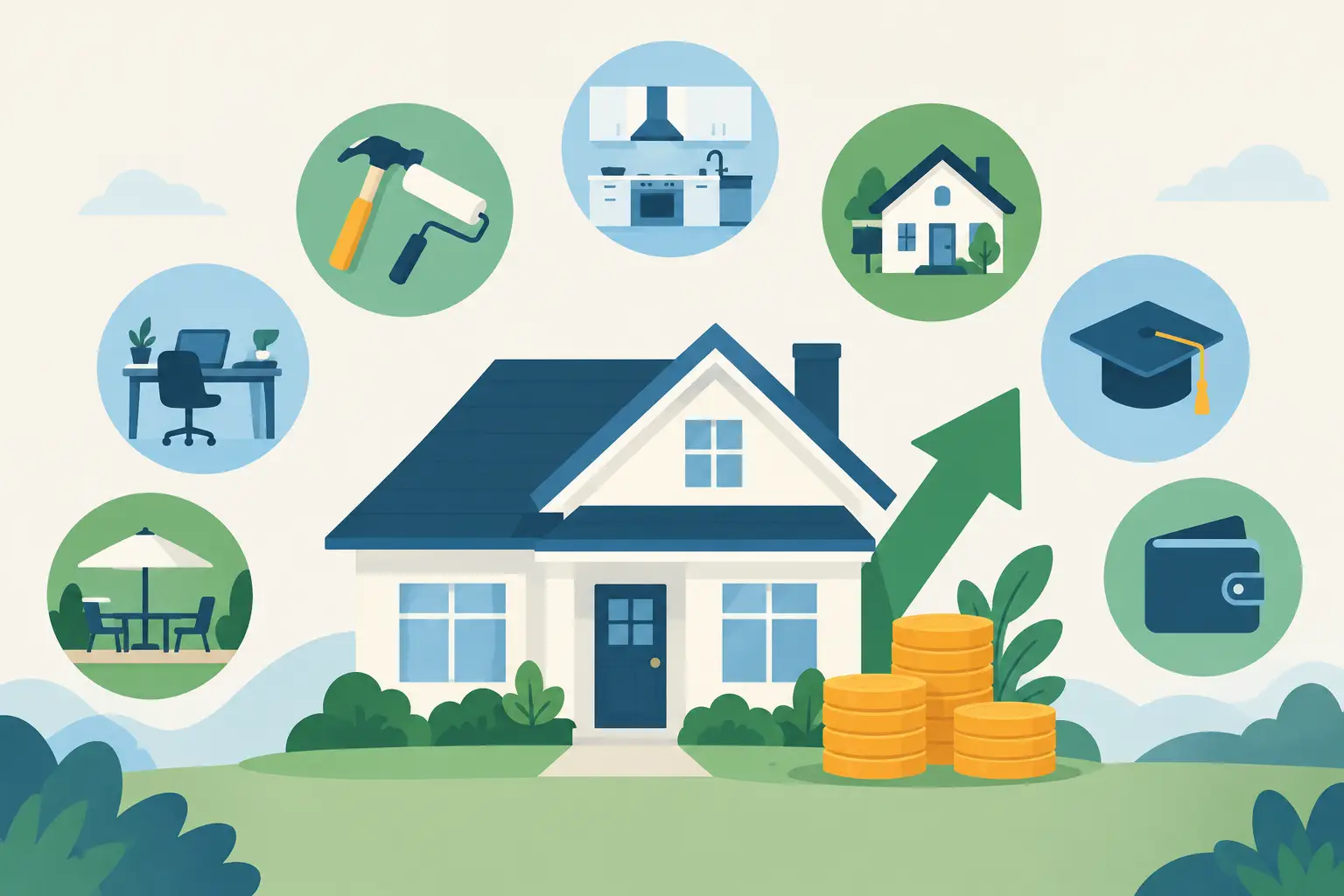
Home renovation is one of the most common and practical uses for a HELOC. A kitchen update, roof replacement, HVAC system, bathroom remodel, accessibility modification, or energy-efficiency upgrade can make your home more comfortable now while potentially strengthening its value over time.
The strongest projects address a clear need. Replacing a failing roof is usually easier to justify than borrowing heavily for a highly personalized upgrade that may not appeal to future buyers. Improvements that protect the property, reduce utility costs, or bring an outdated home in line with comparable homes in the neighborhood often deserve priority.
A HELOC can work particularly well when a project has phases. Instead of taking one large loan balance on day one, you can draw money as contractors complete work. Get detailed bids, keep a contingency reserve for surprises, and avoid spending the full credit line simply because it is available.
2. Consolidating High-Interest Debt With Discipline
Using home equity to pay off high-interest credit card debt may reduce your interest expense and simplify your monthly payments. If you are carrying balances at double-digit rates, a lower-rate HELOC can create meaningful breathing room.
The trade-off is serious: unsecured debt becomes debt secured by your home. This strategy only works when it is paired with a clear payoff plan and a change in spending habits. Paying off credit cards with a HELOC, then rebuilding those card balances, can leave you with two debt problems instead of one.
Before moving forward, compare the HELOC's variable rate, potential fees, draw-period payment, and future repayment payment against your current obligations. Set a target payoff date and automate extra principal payments when possible. Consolidation should help you get out of debt, not make debt easier to carry indefinitely.
3. Covering Major Education Costs
College tuition, professional certifications, trade school, and career-focused continuing education can be reasonable uses of HELOC funds in the right situation. Education may increase earning potential, especially when the borrower has a defined program, a realistic career path, and other aid options have already been reviewed.
Still, a HELOC is not automatically the best choice for tuition. Federal student loans may provide borrower protections, fixed rates, repayment flexibility, or forgiveness opportunities that a HELOC does not offer. For parents helping an adult child, it also matters who will be responsible for repayment and whether the household can manage the debt if income changes.
Use home equity for education only after comparing all available financing choices. The goal is to fund a credential with measurable value, not to place your home at risk for an uncertain return.
4. Managing a Short-Term Financial Gap
A HELOC can provide a financial backstop during a temporary, well-defined cash-flow disruption. Examples include a short gap between selling one home and closing on another, an insurance delay after property damage, or a temporary business interruption for a self-employed homeowner.
This is where the line-of-credit structure can be useful. You may draw only what is needed and repay the balance when expected funds arrive. However, the word temporary matters. A HELOC should not become the primary way to cover ongoing monthly living expenses.
If the issue is a job loss, recurring shortfall, or uncertain income, pause before borrowing. A larger financial adjustment may be needed, such as reducing expenses, restructuring other debt, or seeking more stable income. Borrowing against your home can buy time, but it cannot solve a budget that remains underwater.
5. Funding a Business Opportunity Carefully
For entrepreneurs and self-employed borrowers, a HELOC may be used for working capital, equipment, inventory, a marketing initiative, or a carefully planned expansion. The potential advantage is flexibility: you can access funds when the opportunity requires it rather than borrowing a fixed amount months in advance.
The risk is that a business investment can underperform while the HELOC payment remains your personal responsibility. Keep personal and business finances organized, prepare realistic revenue projections, and avoid using home equity to support a business with no clear path to profitability.
A strong case for using a HELOC is one tied to a specific need and an expected repayment source. A weak case is borrowing simply to keep an unprofitable operation afloat. Business credit products or commercial financing may be a better fit depending on the purpose, business history, and collateral needs.
6. Paying for Essential Medical or Family Expenses
Unexpected medical bills, in-home care, mobility modifications, or urgent family needs can create expenses that cannot always wait. A HELOC may offer lower-cost access to funds than putting a large balance on a credit card, especially when insurance coverage is limited or payment timing is difficult.
Start by reviewing every available alternative. Medical providers may offer payment plans, billing adjustments, financial assistance, or negotiated balances. Insurance claims should be fully evaluated before you borrow. If a HELOC is still the right solution, borrow the smallest amount needed and ask how the payment fits into both your current and future budget.
7. Building a More Resilient Property
Some of the best uses for home equity are upgrades that reduce the chance of expensive future damage. Storm-resistant windows, drainage improvements, wildfire mitigation, plumbing replacement, foundation repairs, and electrical updates may not feel as exciting as a remodel, but they can protect the home you have worked hard to own.
These projects are especially relevant when they address an inspection issue, safety hazard, or recurring maintenance problem. They may also help preserve insurability in areas facing higher weather risks. The return is not always immediate or easy to measure, but preventing a major loss can be more valuable than adding cosmetic features.
8. Creating a Planned Reserve for Large, Known Expenses
A HELOC can be a useful backup reserve for homeowners who expect significant expenses over the next few years, such as a vehicle replacement, aging-home repairs, or a planned move. The key is to treat the credit line as a reserve, not as an invitation to spend.
For many households, cash savings should remain the first line of defense for emergencies. A HELOC can complement savings, but it should not replace them. Access to a line of credit can change, and variable interest rates can rise. Maintaining cash gives you more choices when timing matters.
How to Decide Whether a HELOC Is the Right Tool
Before applying, identify the exact purpose, estimated cost, repayment source, and maximum amount you are willing to borrow. Then stress-test the payment. Ask whether you could still manage it if the interest rate rises, a contractor quote increases, or your income drops for several months.
Also consider the difference between the draw period and repayment period. Payments may be lower while you are drawing funds, particularly if interest-only payments are available. When repayment begins, the monthly obligation can rise substantially because principal repayment is required. A responsible plan accounts for that future payment from the beginning.
Your available credit and pricing will depend on factors such as home value, existing mortgage balance, credit profile, income, debt-to-income ratio, and lender guidelines. An experienced mortgage advisor can help you compare a HELOC with a home equity loan, cash-out refinance, personal loan, or other financing path based on your goals.
A HELOC is most valuable when it gives you flexibility without sacrificing control. Use it for a purpose you can explain in one sentence, borrow only what the plan requires, and make every dollar support a stronger financial position.