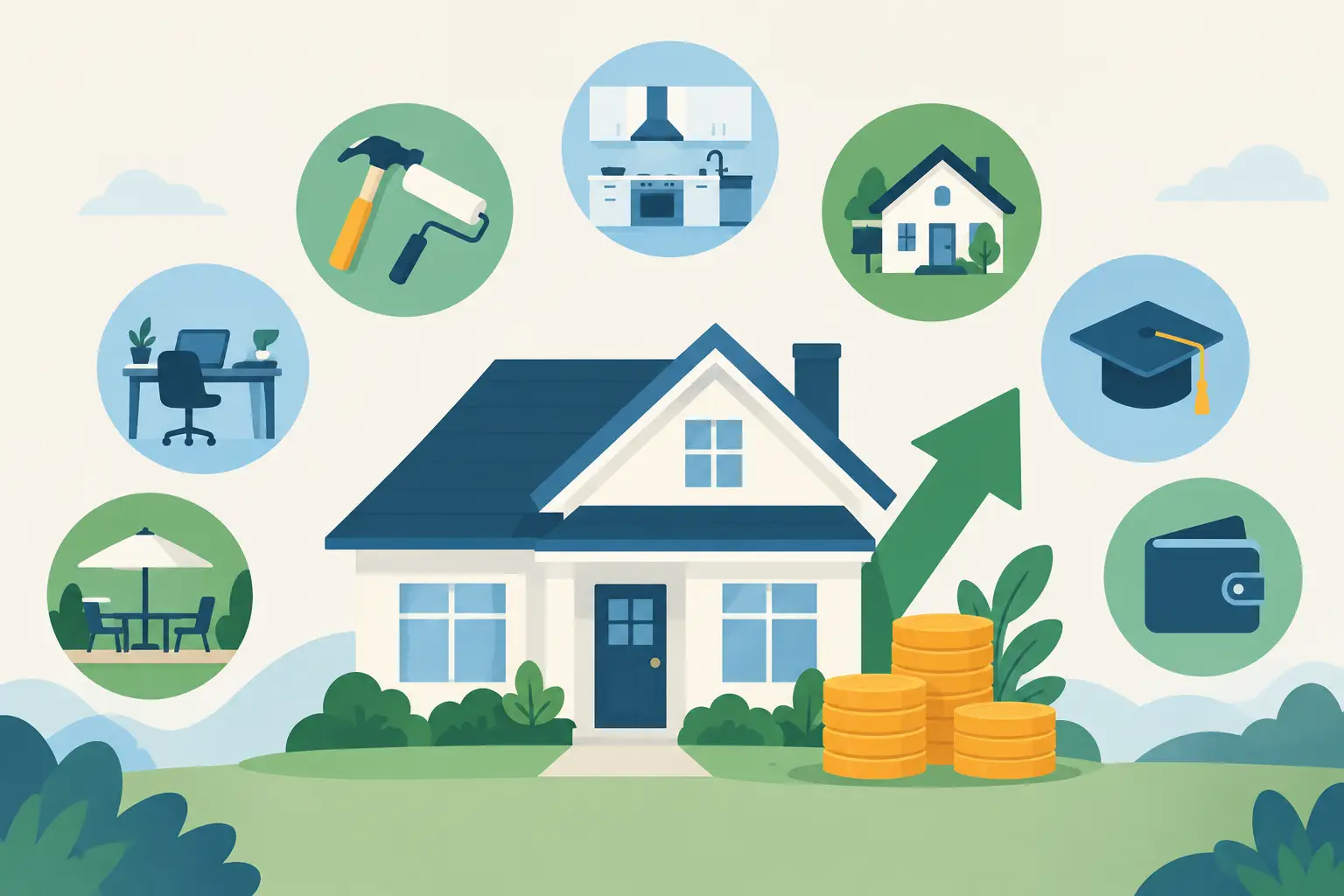
Your home can do more than give you a place to live. For many homeowners, it can become a source of financing for major goals, unexpected expenses, and long-planned improvements. The top home equity uses are not about borrowing simply because funds are available. They are about putting your equity to work in ways that strengthen your finances, protect your household, or improve the property behind the loan.
That distinction matters. Home equity financing is secured by your home, which means a missed payment can carry serious consequences. Before you borrow, you need a clear purpose, a realistic repayment plan, and a payment that still fits comfortably if your budget changes.
What Home Equity Can Help You Accomplish
Home equity is generally the difference between your home's current value and the balance you still owe on your mortgage. If your home is worth $500,000 and your mortgage balance is $300,000, you have $200,000 in equity. You may not be able to borrow all of it, since lenders typically require you to retain a portion of your equity, but it can still provide meaningful financial flexibility.
A home equity loan usually gives you a lump sum with a fixed interest rate and fixed monthly payment. A home equity line of credit, or HELOC, gives you a revolving credit line that you can draw from as needed during the draw period. HELOCs commonly have variable rates, although product terms differ.
The right choice depends on the job your money needs to do. A one-time, defined expense may fit a home equity loan. An ongoing project or expense with an uncertain timeline may be better suited to a HELOC. The goal is to match the financing structure to the need, not force every need into the same product.
Top Home Equity Uses for Long-Term Value
Renovations that improve function and value
Home improvements are among the most practical uses of home equity, especially when they solve a real problem in your home. A kitchen that no longer works for your family, an aging roof, outdated plumbing, accessibility modifications, or an unfinished basement can all be legitimate reasons to consider equity financing.
Not every renovation will return dollar-for-dollar value at resale, and that should not be the only measure. Projects that improve safety, energy efficiency, usable space, or daily comfort can be worthwhile even when their resale return is modest. The strongest candidates are improvements you can afford, plan to complete, and expect to enjoy for years.
Use care with cosmetic projects that stretch your budget. If you plan to sell soon, compare the likely market impact with your total project cost before borrowing against your home.
Consolidating high-interest debt
Using home equity to consolidate credit card balances or other high-interest debt can lower your interest cost and simplify multiple payments into one. For homeowners with a stable income and disciplined repayment habits, this can create a clearer path out of expensive revolving debt.
The risk is real, though. You are replacing unsecured debt with debt secured by your home. Consolidation only works if you stop rebuilding the credit card balances after they are paid off. Without a spending plan and a commitment to change the pattern that created the debt, the lower payment can become a temporary fix that leaves you with more debt later.
Before moving forward, calculate the total cost of the new financing, including any closing costs, rate adjustments on a HELOC, and the repayment period. A lower monthly payment is helpful, but it is not automatically a lower total cost if repayment stretches out for many years.
Paying for education or career advancement
Education can be a strategic investment when it supports a defined career outcome. Home equity may help cover tuition, certifications, licensing requirements, or training that improves earning potential. It can also be useful for a parent helping a child manage education costs, depending on the family's broader financial plan.
Compare home equity financing carefully against federal student aid, scholarships, grants, and student loan options. Federal student loans may offer protections that home equity financing does not. Putting your home on the line for education costs deserves a conservative review, particularly when future income is uncertain.
Handling major medical expenses
A serious medical event can create costs that insurance does not fully cover. Home equity may offer a lower-cost source of funds than high-interest cards or certain personal loans, particularly when treatment is essential and expenses are substantial.
Still, avoid borrowing more than you need. Ask providers about payment plans, financial assistance, negotiated cash rates, and insurance appeals first. Home equity can be part of the solution, but it should follow a careful review of every available resource.
Building an emergency reserve
A HELOC can serve as a backup source of liquidity for homeowners who want a financial safety net without borrowing a large lump sum upfront. This approach can be useful for variable income households, self-employed borrowers, or homeowners preparing for a known period of uncertainty.
A credit line is not the same as cash savings. Lenders can set terms, rates may change, and access is not guaranteed forever. Maintain a cash emergency fund whenever possible, then view a HELOC as an additional layer of flexibility rather than your only protection.
Funding a business opportunity with a clear plan
Some homeowners use equity to launch or expand a business, purchase equipment, build inventory, or support working capital. The potential upside can be significant, but this is one of the highest-risk home equity uses because business income can be uneven and new ventures do not always perform as expected.
If business financing is your goal, separate optimism from the numbers. Review projected revenue, operating costs, seasonality, cash reserves, and the payment you would owe if the business earns less than expected. In many cases, a commercial loan or business credit product may be a better fit than using your primary residence as collateral.
Covering a major life event
A wedding, adoption, relocation, or family milestone can come with substantial costs. Home equity may make sense when the expense is necessary, your repayment plan is solid, and less risky funding sources are limited. It is less compelling when borrowing is used to inflate a celebration or fund discretionary spending that will be gone long before the loan is repaid.
A useful question is simple: Will this expense improve my financial position, protect my family, or solve a lasting need? If the answer is no, consider whether a smaller budget or a savings-first approach would serve you better.
When a HELOC May Be Better Than a Lump-Sum Loan
A HELOC can be especially helpful when costs happen in stages. A renovation with contractor draws, a series of medical bills, or a multi-year education plan may not require all the money at once. Drawing only what you need can reduce the interest you pay compared with taking a full lump sum on day one.
The trade-off is rate uncertainty. Many HELOCs have variable interest rates, so your payment can rise if market rates increase. Review the draw period, repayment period, annual fees, minimum draw requirements, and any rate caps before choosing a line of credit.
A fixed-rate home equity loan may provide more certainty for a defined purchase. You know the amount borrowed, payment schedule, and rate from the start. For borrowers who value predictable budgeting, that stability can be worth more than the flexibility of a credit line.
Questions to Answer Before Borrowing Against Your Home
Before choosing any equity product, pressure-test the decision. Ask yourself:
- Is this expense necessary, value-building, or likely to improve my financial position?
- Can I afford the payment if my income drops or rates rise?
- Have I compared the total cost of a HELOC, home equity loan, cash-out refinance, and other financing options?
- Am I comfortable using my home as collateral for this purpose?
Put Your Equity to Work With a Plan
The best use of home equity is personal, but the principle is consistent: borrow with purpose, not pressure. Prioritize projects and expenses that protect your home, reduce costly debt with a genuine payoff strategy, or create durable value for your household.
US Mortgages can help homeowners evaluate home equity options alongside refinancing and other lending solutions, so the financing supports both the need in front of you and the financial future you are building. A clear conversation about your goals, payment comfort, and available equity can turn a major decision into a confident next step.