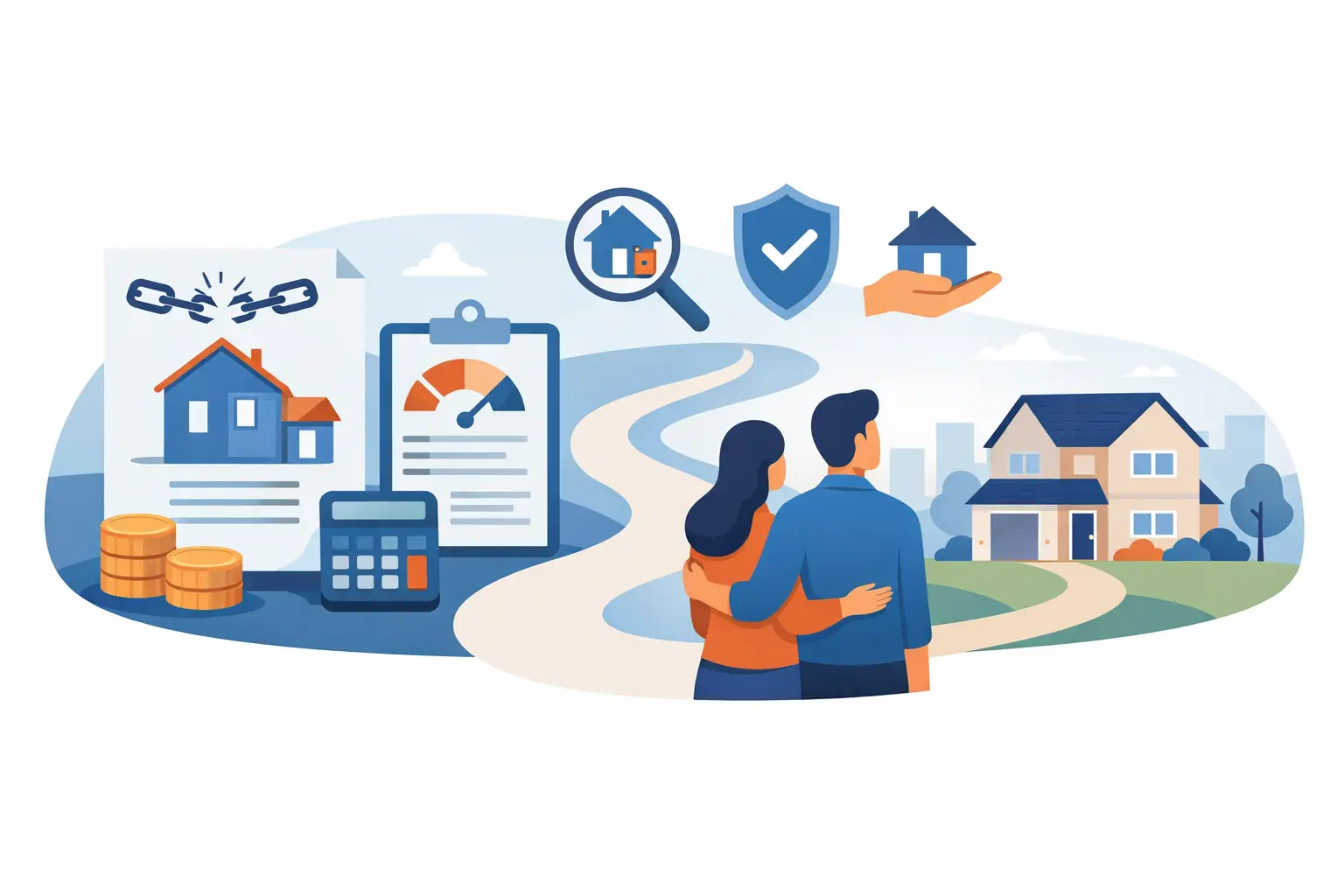
A major repair estimate, tuition bill, or debt payoff plan can make your home equity feel like the obvious answer. But choosing between a HELOC versus home equity loan affects how much you borrow, what your payment looks like, and how much rate uncertainty you accept. The right choice is not simply the product with the lowest advertised rate. It is the one built around your actual spending timeline and repayment capacity.
Both options allow eligible homeowners to borrow against equity they have built in their property. Both are usually secured by a second lien, which means your home is collateral. The difference is how and when you receive funds, how interest is calculated, and whether your rate may change.
HELOC Versus Home Equity Loan: The Core Difference
A home equity line of credit, commonly called a HELOC, works much like a revolving credit line secured by your home. You are approved for a maximum amount, but you generally draw only what you need during a defined draw period. Interest is charged on the balance you actually use, not the full available credit limit.
A home equity loan provides a single lump sum at closing. You borrow a set amount, then repay it on a fixed schedule. In many cases, the interest rate and monthly principal-and-interest payment are fixed for the life of the loan.
That distinction matters. A homeowner remodeling a kitchen in stages may not want to pay interest on money that will sit unused for months. A homeowner consolidating $60,000 in high-interest credit card balances may prefer receiving the full amount at once and locking in a predictable payment.
| Feature | HELOC | Home Equity Loan |
|---|---|---|
| How funds are received | Draw as needed, up to the approved limit | One lump sum at closing |
| Interest rate | Often variable | Often fixed |
| Payment structure | Can change as the balance or rate changes | Usually fixed monthly payment |
| Best for | Ongoing or uncertain expenses | A known, one-time expense |
| Interest charged | On the amount drawn | On the full loan amount |
When a HELOC Can Be the Better Move
A HELOC is often a practical fit when your costs will arrive over time or the final amount is not yet certain. Think of a renovation where a contractor is paid in phases, a long-term emergency reserve, or a series of home repairs that cannot be scheduled all at once.
Because you can access funds as needed, a HELOC can help you avoid borrowing more than necessary on day one. If you are approved for a $100,000 line but use only $25,000, interest generally applies to the $25,000 balance. That flexibility is the primary advantage.
Most HELOCs have two phases. During the draw period, which is often several years, you can borrow, repay, and borrow again up to the limit, subject to the terms of the agreement. Some HELOCs permit interest-only payments during this phase, although borrowers can often pay more toward principal. Once repayment begins, new draws typically stop and the outstanding balance is repaid over a set term.
The payment change at the end of the draw period deserves close attention. If you have been making interest-only payments, your required payment may rise when principal repayment begins. A variable rate can also raise your payment before that transition. Borrowers who choose a HELOC should budget for more than the initial minimum payment whenever possible.
A HELOC may be a strong option if you value flexibility, expect to repay draws quickly, and have room in your budget for potential rate movement. It is less appealing when a stable, fixed payment is your top priority.
When a Home Equity Loan Delivers More Certainty
A home equity loan makes sense when you know exactly how much you need and want a clear payoff path. You receive the proceeds once, then make scheduled payments, commonly with a fixed rate. That structure can make household budgeting much easier.
For example, say you need $75,000 to replace a roof, update an aging HVAC system, and make accessibility improvements. If the costs are known and the work will begin immediately, a lump-sum loan can put all funds in place while protecting you from future rate increases. Your payment is established from the start, assuming the loan has a fixed rate.
This predictability can also be valuable for debt consolidation. Replacing high-rate revolving debt with a lower-rate home equity loan may reduce interest costs and create a defined repayment date. But the decision should be made carefully. You are converting unsecured debt into debt secured by your home. A lower payment is not automatically a better outcome if it comes from extending repayment for many more years.
A home equity loan can be the better fit when the amount is fixed, the project has a defined budget, and payment certainty matters more than ongoing access to funds.
Compare the Cost Beyond the Interest Rate
The rate matters, but it is only one part of the decision. Ask about the annual percentage rate, lender fees, third-party charges, potential annual fees, early closure fees, and any prepayment terms. A HELOC may have a low introductory rate that adjusts later. A home equity loan may have closing costs that affect whether the loan makes sense for a smaller borrowing need.
You should also understand the rate index and margin on a variable-rate HELOC. The index may change with market conditions, and the margin is added to determine your rate. Ask whether there is an introductory rate, a rate cap, and how frequently the rate can adjust. These details show how high your payment could go, not just what it costs today.
For either product, lenders will review the home’s value, your current mortgage balance, income, credit profile, debt-to-income ratio, and combined loan-to-value ratio. The amount available depends on your equity and the lender’s guidelines, not just the value shown by an online estimate.
As a simple example, a home worth $500,000 with a $300,000 first mortgage has $200,000 in total equity. That does not mean all $200,000 is available to borrow. If a lender permits borrowing up to 80% of the home’s value across all liens, the maximum combined debt would be $400,000. After subtracting the $300,000 first mortgage, the potential second-lien amount could be up to $100,000, subject to qualification and final valuation.
Protect Your First Mortgage Strategy
If you have a low fixed rate on your primary mortgage, a HELOC or home equity loan may let you access equity without replacing that favorable first loan. This can be a meaningful advantage over a cash-out refinance, which replaces the entire existing mortgage with a new, larger loan.
That said, a second lien adds another monthly obligation. Before moving forward, test the payment against realistic scenarios: a higher HELOC rate, a reduced household income, or a larger-than-expected project budget. Your home is a long-term asset, not a blank check for expenses that do not improve your financial position.
Interest may be tax-deductible in certain situations when proceeds are used to buy, build, or substantially improve the home securing the loan. Tax treatment depends on your individual circumstances and current tax law, so confirm the details with a qualified tax professional rather than assuming the interest will be deductible.
Choose Based on Your Timeline, Not Just Today’s Rate
Start with one question: do you need a specific dollar amount now, or do you need access to funds over time? If the answer is a specific amount and a predictable payment matters most, a home equity loan is often the clearer choice. If costs are phased, uncertain, or likely to recur, a HELOC may provide the flexibility you need.
Then look at your repayment plan. Do not base the decision solely on the lowest possible payment during the first year. Consider the full repayment period, the possibility of variable-rate increases, and whether you could comfortably repay the balance if your financial situation changed.
At US Mortgages, borrowers can work with an advisor to compare available equity options against their existing mortgage, goals, income, and budget. The best structure should help you move forward with confidence, not create payment pressure later.
Your equity has taken years to build. Use it for a purpose that strengthens your home, your finances, or your family’s next step, and choose the repayment structure that lets you keep control of the plan.